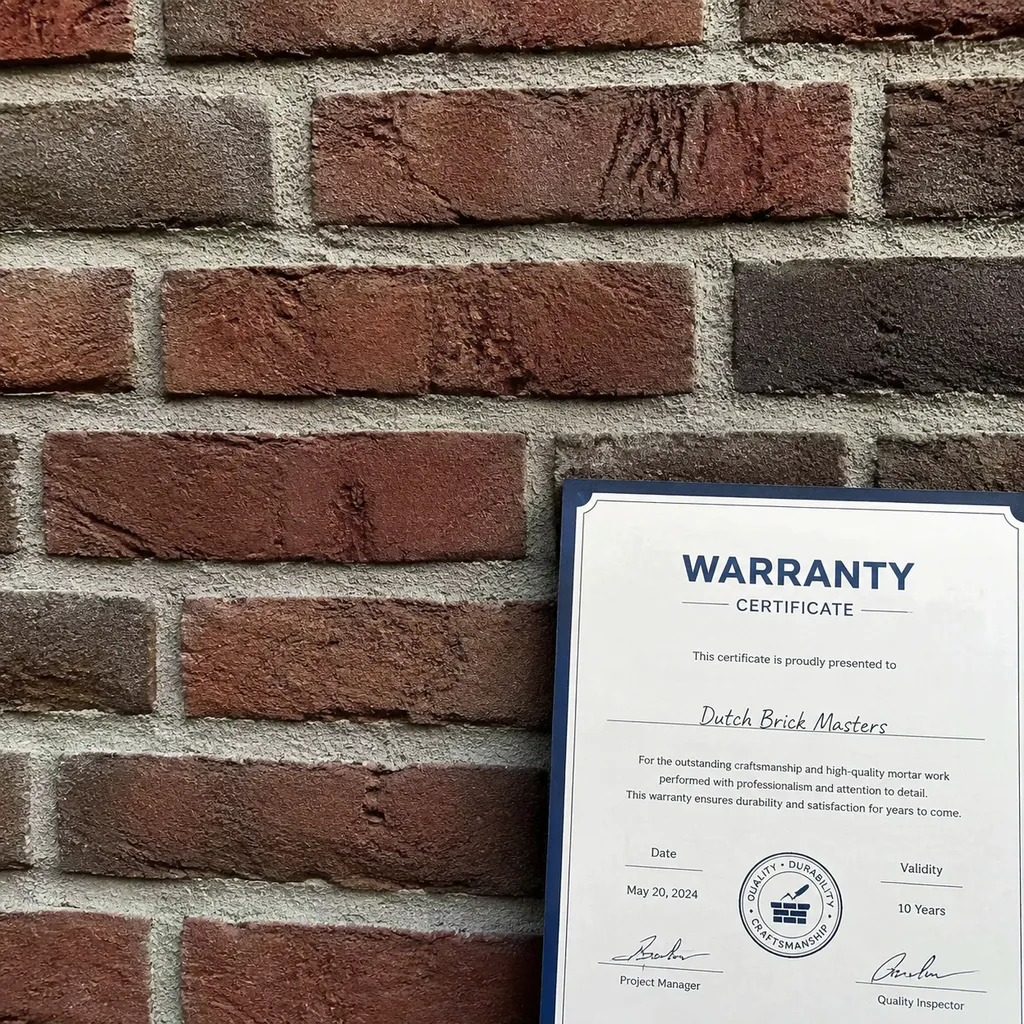
The choice of the right pointing materials largely determines the lifespan and appearance of your facade. Whether you are renovating a historic building in Deventer or maintaining a modern home in Apeldoorn, selecting the right pointing material requires knowledge and experience. In this article, we discuss the different types of pointing materials, their properties, and applications, so you can make an informed choice for your pointing project.
Why the choice of pointing materials is crucial
Pointing fulfills several essential functions in your facade. It protects the wall structure against moisture and weather influences, contributes to the stability of the masonry, and determines the aesthetic character of your building. A wrong choice of material can lead to moisture problems, cracking, and costly repair work.
In the Overijssel and Gelderland regions, we regularly see damage caused by the use of unsuitable pointing materials. Especially with older buildings, it is important that the pointing material matches the existing masonry in terms of hardness and vapor-permeable properties. A pointing mortar that is too hard can, for example, lead to the crumbling of historic bricks.
Traditional lime mortar: the foundation for historic masonry
Lime mortar has been the standard pointing material for centuries and remains the best choice for historic buildings. This material consists of lime, sand, and water, and is characterized by its flexibility and vapor-permeable properties.
Advantages of lime mortar
- Excellent vapor permeability, allowing moisture to evaporate from the masonry
- Flexible character that moves with natural settlements
- Softer than most historic bricks, keeping the stone protected
- Suitable for monumental buildings and protected cityscapes
- Natural and sustainable material
Applications and limitations
Lime mortar is ideally suited for buildings from before 1920, when cement mortar was not yet in general use. In cities like Zutphen, Kampen, and Zwolle, we find many historic buildings where lime mortar is the only responsible choice. The material does require craftsmanship during application and has a longer curing time than modern alternatives.
Cement mortar: strength and durability for modern masonry
From the beginning of the twentieth century, cement was added to pointing mortar, resulting in harder and faster-curing mortars. Cement mortar consists of cement, sand, and water, sometimes supplemented with lime for better workability.
Properties of cement mortar
Cement mortar offers high compressive strength and is resistant to intensive weather influences. The material is water-repellent and has a relatively short curing time. For modern new construction projects and buildings from the period after 1950, cement mortar is often the suitable choice.
When to avoid cement mortar
For historic masonry, we advise against the use of pure cement mortar. The high hardness can lead to tension in the masonry, where the joint becomes harder than the stone. This results in damage to the bricks themselves instead of the joint, making repairs significantly more expensive. The limited vapor permeability can also cause moisture problems in older structures.
Bastard mortar: the best of both worlds
Bastard mortar combines cement and lime, creating a balanced material that offers both strength and flexibility. These pointing materials are highly versatile and are often the practical choice for renovation projects.
Composition ratios
The ratio between cement and lime determines the properties of the bastard mortar. A common composition is 1 part cement, 2 parts lime, and 9 parts sand. By adjusting this ratio, the mortar can be tailored to the specific requirements of the project. More lime provides a more flexible and vapor-permeable joint, while more cement increases strength and water resistance.
Area of application
Bastard mortar is suitable for a wide range of projects, from post-war homes to lightly protected heritage. In practice, we often see this material used in renovations in residential neighborhoods from the 1950s to the 1980s, where a balance between durability and breathability is desired.
Special pointing materials for specific applications
Epoxy pointing materials
For extreme conditions, such as industrial environments or facades with high chemical exposure, epoxy-based pointing materials can offer a solution. These synthetic resin-bound materials are very hard, chemically resistant, and completely waterproof. However, their application is limited to specific situations and requires specialized knowledge.
Trass mortar for damp environments
Trass mortar contains trass, a volcanic rock that gives the mortar extra hydraulic properties. This material can cure underwater and is particularly suitable for basements, cellars, and other damp applications. In the floodplains of the IJssel and other areas with high groundwater levels, trass mortar can provide a durable solution.
Color and texture: aesthetic considerations
In addition to technical properties, the appearance of pointing plays an important role. The color of pointing materials is determined by the sand used and any color pigments. For a harmonious result, it is essential that the joint color matches the existing facade.
Sand choice and color effect
The region has various types of sand, each giving its own color character. River sand from the IJssel gives a different shade than quarry sand from the Veluwe. In restoration projects, we analyze the existing pointing to determine the correct sand type and color. This level of detail makes the difference between a professional result and visible patchwork.
Joint profiles and finishing
The profile of the joint also influences the appearance and functionality. A recessed joint emphasizes the bricks and offers good water drainage. A flush joint provides a calmer look. The choice depends on the architecture of the building and the local building tradition.
Sustainability and environmental impact
In a time of increasing environmental awareness, the ecological footprint of pointing materials also deserves attention. Lime mortar scores favorably in this regard due to its lower production temperature and its ability to absorb CO2 during curing. Cement production, on the other hand, is energy-intensive and contributes significantly to CO2 emissions.
For sustainable renovation projects, we increasingly explore alternatives such as natural hydraulic lime (NHL), which combines the advantages of lime mortar with improved strength properties. The reuse of existing materials and local sourcing of raw materials also contribute to a smaller ecological footprint.
Practical tips for material selection
When selecting pointing materials, we advise going through the following steps:
- Determine the construction period of your building; this guides the choice of material
- When in doubt, have a pointing sample analyzed by a specialist
- Take into account the location and exposure to weather influences
- Consider the vapor-permeable properties in relation to the wall structure
- Match the hardness of the joint to the strength of the bricks
- Choose local suppliers to reduce transport costs and CO2 emissions
- Preferably plan pointing work in the spring or autumn, not during frost or extreme heat
Frequently asked questions about pointing materials
Can I determine myself which pointing material is suitable for my building?
For modern homes built after 1970, the choice is often simpler, but for older buildings or monuments, we recommend professional advice. A wrong choice of material can lead to irreversible damage. We offer free inspection and advice for projects in Overijssel and Gelderland, where we assess the specific situation on-site.
How much more expensive is lime mortar compared to cement mortar?
Lime mortar is typically 20 to 40 percent more expensive to purchase than standard cement mortar. However, the total project costs are closer together, as the application time is comparable. Moreover, the right choice of material prevents future damage, which is cost-saving in the long run. For monumental buildings, lime mortar is often the only permitted option.
How long does pointing last and when does it need to be replaced?
The lifespan of pointing varies greatly depending on the material, the application, and exposure to weather influences. Well-applied lime mortar can last 50 to 80 years, while cement mortar often lasts 30 to 50 years. Signs for replacement include falling out joints, cracks, discoloration, and moisture penetration. Regular inspection helps to identify problems early.
Does the pointing material have to match the original exactly?
For monumental buildings and protected cityscapes, there is often a requirement that the pointing material matches the original in terms of composition and appearance. With regular homes, there is more freedom, but here too we advise matching the original choice of material. This prevents technical problems and ensures an aesthetically pleasing result. Deviating from the original is only possible when this is technically or building-physically necessary.
Professional execution makes the difference
The quality of pointing is not only determined by the choice of material but also by professional execution. Correctly mixing the mortar, the right application time, applying it in suitable weather conditions, and correctly finishing the joint are all factors that influence the final result.
Our experience in the Overijssel and Gelderland regions has taught us that local conditions such as the composition of the groundwater, the prevailing wind direction, and regional building traditions all play a role in the optimal approach. You cannot combine this knowledge from a manual; it comes from years of practical experience in the region.
Have your pointing done professionally
The choice of the right pointing materials requires knowledge of building history, material properties, and local conditions. Whether you are renovating a monumental building in the center of Zwolle or maintaining a post-war home in Arnhem, we are happy to advise you on the best choice of material for your specific situation.
Contact us for a no-obligation inspection and quote. We assess your facade, advise on suitable materials, and ensure professional execution that will last for years. With our experience in pointing and facade renovation throughout Overijssel and Gelderland, we guarantee a result you will be satisfied with.